The ’80s Heartthrob Whose Real Life Was Darker — and More Inspiring — Than Anyone Knew
To millions of moviegoers in the 1980s, Andrew McCarthy seemed to have the perfect Hollywood rise.
With his quiet charm and thoughtful screen presence, he became one of the most recognizable young stars of the decade, appearing in classics like Pretty in Pink, St. Elmo’s Fire, and Mannequin.
He looked like the picture of effortless success — the kind of actor whose career seemed to fall into place at exactly the right moment. But the journey behind the scenes was far from simple, and his real-life story is far more complex than the polished image audiences saw on screen.
From an ordinary upbringing to an unlikely breakthrough
McCarthy grew up in New Jersey, far from Hollywood or any direct path into the industry.
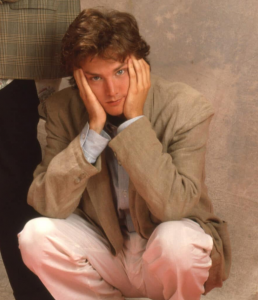
He eventually found his way into acting almost by accident, landing his first major role in Class (1983) after responding to an open casting call. That performance led to a wave of opportunities and, before long, he became part of the group later dubbed the “Brat Pack,” a media label applied to a circle of young actors appearing in major 1980s films.
But while his career was ascending rapidly, the attention and unusual pressures of sudden fame didn’t fit his personality.
McCarthy has openly described himself as introverted and unprepared for the spotlight, a contrast that made his early success more complicated than fans ever realized.
Personal struggles hidden behind the roles
During an era when teenage stardom often came with intense scrutiny, McCarthy was dealing with private challenges of his own.
He has spoken in interviews about turning to alcohol as a coping mechanism during his rise, describing how it initially seemed to give him confidence but ultimately became a destructive escape.
By the late 1980s, that struggle reached a turning point.

In his twenties, while still actively working in film, he chose to seek help, entered recovery, and made the decision to rebuild his life with clarity and purpose. That commitment became a foundation for the next chapter of his career — one built on stability rather than pressure.
Reinvention: director, writer, traveler
Instead of chasing the same roles he was known for in his youth, McCarthy shifted his focus. He began directing television, including episodes of Orange Is the New Black and Gossip Girl. Away from the camera, he discovered a new passion: travel writing.
He went on to contribute to National Geographic Traveler, The New York Times, and other respected publications, eventually earning recognition as Travel Journalist of the Year.

For him, writing offered a different kind of storytelling — one grounded in curiosity rather than performance.
A life built on purpose rather than image
Today, McCarthy lives a quieter life than the one projected in his Brat Pack era. He is a father, a husband, a director, a writer, and someone who has openly discussed growth, vulnerability, and recovery with honesty.
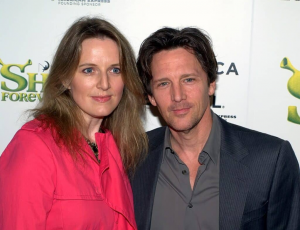
His journey didn’t follow the traditional Hollywood script — and that’s precisely what makes it so compelling. Instead of being defined by early fame, he chose to reshape his identity, turning difficulty into perspective and public attention into meaningful work.
Why his story resonates

Nostalgia may draw audiences back to his films, but it’s the depth of his real-life journey — from reluctant celebrity to grounded creator — that has earned him lasting admiration.
Andrew McCarthy’s story isn’t just about stardom.
It’s about resilience. Reinvention. And learning that success isn’t measured only by fame, but by the life you build when the cameras stop rolling.