Behind the Glitter: The Dark Childhood of a Hollywood Icon
Long before she became one of Hollywood’s brightest stars, she was simply a little girl named Frances Gumm, a child pushed into the spotlight long before she understood what fame meant.
Her voice could stop audiences in their tracks, but behind that extraordinary gift was a childhood marked by chaos, pressure, and heartbreak.
Her journey is a reminder that the path to stardom often hides wounds that never fully healed.
A Childhood Filled With Turmoil
Born in Minnesota in 1922, Judy Garland stepped onstage before she was even three years old.
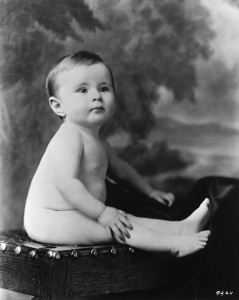
Her parents, both vaudeville performers, moved frequently, and the family eventually fled to California amid rumors surrounding her father’s private life.
Her home environment was unstable. Her parents’ marriage swung between breakups and reconciliations, leaving Judy caught in emotional crossfire. She later described feeling unwanted, overlooked, and only valued when she performed.
According to her own accounts, her mother — Ethel Gumm — was controlling, demanding, and determined to make her daughters stars.
Biographers and Judy herself said she was given pills to stay awake and pills to sleep, a studio-era practice that tragically shaped the rest of her life.
In one late interview, Judy remembered her mother warning her backstage:“You get out and sing — or I’ll wrap you around the bedpost.”
It was a threat she never forgot.
Hollywood Welcomes a Star… But At a Devastating Cost
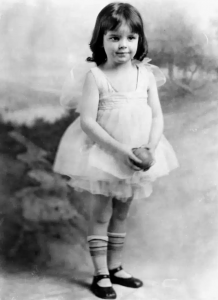
In 1935, MGM signed the young performer, and by 1937 her career had caught fire. But even as she dazzled on screen, studio executives chipped away at her confidence.
Louis B. Mayer — one of the most powerful men in Hollywood — reportedly called her:“My little hunchback.”
She was placed on strict diets consisting of soup, cottage cheese, black coffee, and amphetamine-based pills to keep her weight down. Her teenage years were spent filming one movie while rehearsing another, leaving her exhausted and dependent on the pills MGM supplied.
Despite all this, Judy’s talent shone.
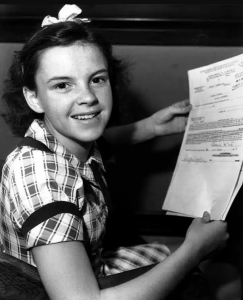
Her performance in Pigskin Parade caught attention. But tragedy struck when her father died suddenly in 1935, a heartbreak she carried for the rest of her life.
1939: The Year That Changed Everything
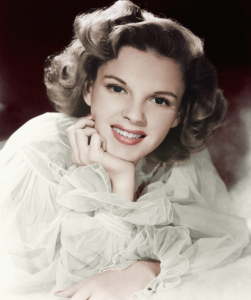
That year, The Wizard of Oz debuted, and the world met Dorothy Gale — a character Judy played with aching sincerity. Her rendition of Somewhere Over the Rainbow became one of the most beloved songs in history.
But while audiences saw innocence, MGM saw profit. Behind the scenes, Judy dealt with:
crushing work schedules
extreme dieting
constant criticism
growing dependence on prescription drugs
She later said:
“The only time I felt wanted as a child was when I was onstage.”
The Legend Rises — and the Struggles Deepen
Through the 1940s and 1950s, Judy starred in classics such as Meet Me in St. Louis, Easter Parade, and her breathtaking comeback in A Star Is Born (1954).
Yet she identified more with the film’s troubled male character, Norman Maine, than with the hopeful heroine she portrayed.
She once joked in 1968:
“I’m the queen of the comeback… I’m getting tired of coming back.”
Behind the humor was exhaustion — emotional, physical, and spiritual.
💔 A Life Marked by Pain — And Astonishing Courage
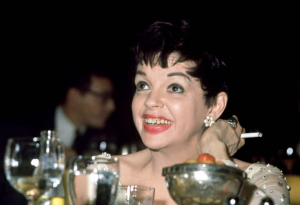
Judy battled lifelong insecurity, depression, and the addiction that began in childhood under MGM’s control. Friends, colleagues, and even family spoke of her brilliance — and of her fragility.
She attempted to take her life multiple times. Studio pressure, failed relationships, financial stress, and years in the spotlight took their toll.
On June 22, 1969, Judy Garland died in her London home at the age of 47. A coroner later ruled the cause as an accidental overdose of barbiturates. It was a heartbreakingly quiet end for a woman whose voice had filled the world.
🌈 Her Legacy Lives On — Far Beyond the Rainbow
Judy Garland was luminous, raw, vulnerable, hilarious, and fiercely courageous. She sang with a depth that came from surviving what no child should endure. Her daughter Lorna Luft later said:
“We all have tragedies in our lives, but that doesn’t make us tragic.”
And that is Judy’s story:
Not tragic — but human.
Not broken — but breathtakingly brave.
A woman who kept singing long after the world took more from her than it ever returned.
Her voice remains one of the most beautiful ever recorded. Her pain never dimmed her brilliance. And somewhere, far beyond the rainbow she dreamed of, may she finally rest in peace. 🌈🕊