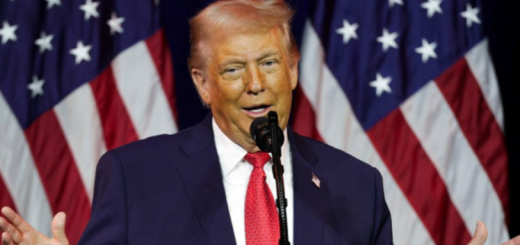
Donald Trump’s Health Draws Renewed Attention as Experts and Official Reports Diverge
Discussion surrounding the health of former U.S. President Donald Trump has resurfaced, highlighting the complex space where medical transparency, public perception, and political scrutiny intersect.
At the center of the conversation is a contrast between official medical evaluations and commentary from external experts who have analyzed Trump’s public appearances.
While verified clinical reports continue to describe him as physically and cognitively capable, outside opinions—based solely on observation rather than examination—have sparked renewed debate.
What the Official Medical Report Says
Earlier this year, Trump’s physician, Dr. Sean Barbabella, released a comprehensive medical assessment outlining the former president’s physical condition, medical history, and cognitive status.
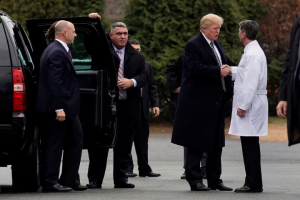
According to the report, Trump’s cardiovascular, neurological, and sensory systems were found to be within normal ranges, with no limitations identified that would interfere with the responsibilities of national leadership.
The evaluation also documented routine medical procedures and ongoing prescriptions, none of which were described as concerning. Dr. Barbabella concluded that Trump demonstrates strong mental acuity and remains fully capable of handling the demands associated with the presidency.
Trump himself publicly echoed those findings, stating that he completed a cognitive evaluation and performed well across all components. Supporters have pointed to these documented assessments as the most reliable indicators of his health, emphasizing that they are based on direct clinical observation and testing.
External Commentary Fuels Public Conversation
Despite the official report, discussion intensified after comments from mental health professionals who have not examined Trump personally.
Among them is Dr. John Gartner, a psychologist who has shared concerns based on long-term observation of Trump’s public behavior and movement patterns.
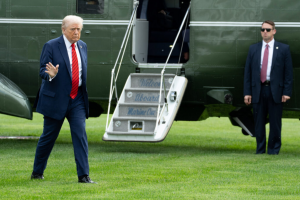
Gartner has emphasized that his commentary does not constitute a diagnosis, noting that it is based entirely on publicly available footage rather than medical records or in-person evaluation.
He has pointed to perceived changes in posture, gait, and physical coordination over time, suggesting these observations merit discussion—but not definitive conclusions.
Medical experts broadly agree on one point: observational analysis cannot replace clinical evaluation.
Without access to full medical records, standardized testing, and direct examination, external assessments remain speculative.
The Role of Media and Public Perception
In today’s media environment, visual content plays a powerful role in shaping public opinion.
Video clips, photos, and side-by-side comparisons of public appearances circulate rapidly, often encouraging interpretation without context.
Analysts note that aging, physical fatigue, camera angles, and even footwear can influence how movement appears on video. As a result, medical professionals caution against drawing conclusions from isolated moments captured during public events.
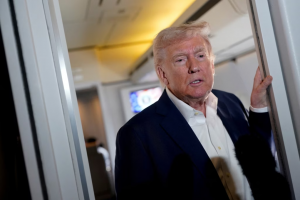
The discussion also reflects broader societal questions about transparency, privacy, and accountability for public figures. While voters understandably want reassurance about a leader’s ability to serve, health disclosures have historically balanced public interest with personal medical privacy.
Why the Debate Persists
The ongoing attention surrounding Trump’s health underscores a recurring challenge in modern politics: separating verified medical information from interpretation and opinion. In highly polarized environments, even routine disclosures can become focal points for broader political narratives.
As Trump continues to maintain a visible public schedule, speculation is likely to persist—especially during election cycles, when leadership stamina and decision-making capacity are frequently debated topics.
A Broader Takeaway
Ultimately, the discussion is less about any single report or comment and more about how modern audiences consume information. In an era of constant visibility and rapid analysis, the line between evidence and perception can blur quickly.
For readers, the most reliable reference point remains documented medical evaluations conducted by qualified physicians, while recognizing that external commentary—without direct examination—should be viewed as opinion rather than conclusion.
The debate serves as a reminder that in public life, health discussions are rarely just medical. They reflect cultural expectations, political context, and the growing influence of visual media in shaping how leadership is perceived.