Why the First American-Born Pope May Avoid the U.S. During Trump’s Presidency
At first glance, it sounds surprising.
Why would the first American-born leader of the Catholic Church choose to stay away from his home country—especially during such a historic moment?
But when you look closer, the answer isn’t about a single decision. It’s about a growing contrast in values, tone, and global priorities.
And that contrast is becoming harder to ignore.
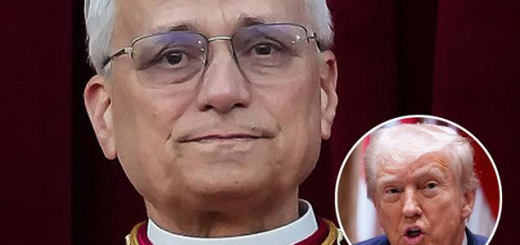
When Pope Leo XIV—formerly Robert Prevost—was elected in May 2025, it marked a defining moment for the Catholic Church.
For the first time, an American would lead over a billion Catholics worldwide.
Naturally, many expected that milestone to bring stronger symbolic ties between the Vatican and the United States.
Instead, early signals suggest something more complex is unfolding.
The relationship between the Vatican and Donald Trump has not been defined by open conflict—but by a clear difference in perspective.
On one side, Pope Leo XIV has consistently emphasized:
- humanitarian responsibility
- compassion toward migrants
- diplomatic restraint
- global cooperation
On the other, Trump’s political approach has often leaned toward:
- stricter immigration enforcement
- national security priorities
- assertive geopolitical strategy
Neither stance is new. But placed side by side, the contrast becomes more visible—and more meaningful.
One of the most talked-about moments came during the Pope’s address to Vatican diplomats.
Without directly naming any country or leader, he cautioned against a shift toward force-driven global politics—encouraging dialogue over confrontation.
Observers were quick to interpret the message.
Some U.S. officials reportedly viewed it as an indirect critique of American foreign policy direction.
That’s where things started to feel… different.
In an unusual move, discussions reportedly took place between Pentagon officials and Cardinal Christophe Pierre.
While described publicly as respectful and constructive, the very nature of that high-level interaction raised eyebrows.
Moments like this don’t always signal conflict.
But they often point to something deeper—an effort to manage differences before they become louder.
Sometimes, what doesn’t happen says more than what does.
Reports suggest that Pope Leo XIV may choose to limit or decline visits to the United States during Trump’s presidency.
That includes potentially skipping major national events, such as the upcoming 250th anniversary celebrations.
Instead, one of his early priorities is expected to be a visit to Lampedusa—a location that has become a global symbol of migration and humanitarian struggle.
That choice speaks volumes.
Lampedusa is not just a destination—it’s a statement.
By going there, the Pope reinforces a message that has defined much of his leadership:
👉 focus on the vulnerable
👉 attention to global inequality
👉 urgency around migration issues
It’s not framed as political.
But in today’s climate, it inevitably carries meaning.
Despite speculation, neither side has escalated the situation publicly.
- U.S. officials continue to emphasize respect for the Vatican
- The Holy See has not declared any diplomatic tension
What exists instead is something more subtle:
a relationship shaped by different worldviews rather than direct disagreement
At its core, this situation reflects a timeless dynamic.
Spiritual leadership and political leadership often move in parallel—but not always in alignment.
- The Pope’s role centers on moral guidance and global compassion
- Political leaders must balance national interest, security, and internal pressures
Both are powerful.
But they don’t always point in the same direction.
For now, the relationship remains cautious—not confrontational.
There are no official breaks, no dramatic statements.
Just careful language, symbolic choices, and a quiet awareness of global perception.
Whether this becomes a lasting divide—or simply a temporary phase—remains to be seen.
In many ways, this story isn’t about tension.
It’s about contrast.
And sometimes, contrast says more than conflict ever could.