While sorting through my grandmother’s belongings, I came across a small box tucked carefully behind a row of old books. It didn’t look like much at first, but the way it had been placed suggested it mattered.
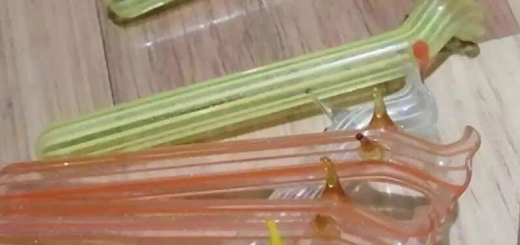
Inside, wrapped in soft tissue, was a set of delicate glass tubes—each one slender, colorful, and crafted with surprising detail.
At the top of each piece was a tiny hook, hinting that these weren’t just decorative objects, but something with a purpose.
At first, I assumed they were ornaments or perhaps parts of an old craft set. But the more I examined them, the more intentional they felt.

Their uniform shape, combined with the subtle variations in color, suggested they belonged to a specific tradition.
It was clear they had been preserved with care, as if they once held meaning far beyond their size.
Looking for answers, I showed them to an older family member—someone more familiar with past customs. Her reaction was immediate.
With a smile, she explained that these were miniature glass vases, once carried in the pockets of men’s jackets.
Designed to hold a single small flower, they served as a quiet yet thoughtful gesture—an elegant way to express affection, admiration, or simple kindness.
This tradition, now largely forgotten, reflected a different era of communication—one where small, intentional acts carried deep emotional weight.
A single bloom, placed in a tiny vase and worn close, could say more than words ever could. It was not about extravagance, but about attention to detail and the meaning behind the gesture.
Holding those small glass pieces again, I realized they were more than just vintage objects.
They were fragments of a time when elegance lived in simplicity, and connection was expressed through subtle, meaningful acts.
Discovering them was a reminder that even the smallest items can carry powerful stories—quietly preserving moments of care, style, and human warmth across generations.