Judge Rules on Key Issue in Charlie Kirk Case
High-profile court cases often raise difficult questions about fairness, transparency, and the role of the media—and the latest development in this case is no exception.
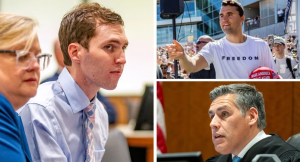
A judge has issued a new ruling in the case involving Tyler Robinson, who faces serious charges in connection with the death of political commentator Charlie Kirk.
The decision centers on whether cameras should be allowed in the courtroom during upcoming proceedings, a topic that has sparked debate on both sides.
Judge Tony Graf Jr. of the Fourth Judicial District Court ruled that cameras will be permitted during a scheduled April 17 hearing.
This session will play a key role in determining whether media access—including television coverage, audio recording, and photography—should be allowed in future pretrial proceedings.
In explaining the decision, the court emphasized the importance of balancing transparency with the defendant’s right to a fair trial.
The judge noted that, at this stage, there was not enough justification to restrict public access entirely, citing the long-standing principle that court proceedings are generally open unless compelling reasons suggest otherwise.
The ruling also referenced the Chandler v. Florida decision, which established that the presence of cameras in courtrooms does not automatically violate a defendant’s constitutional rights. This precedent has often been used to support media access in high-profile cases, provided it does not interfere with the judicial process.
Defense attorneys argued strongly against allowing cameras, expressing concern that extensive media coverage could influence public opinion and make it more difficult to select an impartial jury.
They have requested that certain portions of the hearing be conducted privately, particularly when discussing sensitive evidence or issues related to privacy.
Prosecutors, however, pushed back against these claims, maintaining that open proceedings are essential for public accountability.
They argued that transparency helps ensure confidence in the legal system, especially in cases that attract widespread attention.
The case itself stems from an incident that reportedly took place at Utah Valley University.
If convicted, Robinson could face severe legal consequences, including the possibility of the death penalty, making the stakes of the proceedings especially high.
Legal experts note that disputes over media access are common in cases of this magnitude.
Courts must carefully weigh competing interests: the public’s right to be informed, the media’s role in reporting, and the defendant’s right to a fair and unbiased trial.
The upcoming April hearing is expected to address these issues in greater detail, including whether certain evidence should be limited in public view and how media coverage might impact jury selection.
While the outcome of the case remains uncertain, the current ruling underscores a broader principle within the justice system: transparency is the default, but it must always be balanced against fairness.
As the proceedings continue, both legal teams are expected to present further arguments, and the court will ultimately determine how to navigate the complex intersection of media access and judicial integrity.
For now, the decision ensures that at least part of the process will remain visible to the public—an outcome that reflects the ongoing effort to maintain both openness and fairness in one of the most closely watched cases in recent memory.