Lawmakers Speak Out After Plane They Were On Clips Another Aircraft at Reagan Airport
A Routine Taxi Turned Into an Unexpected Moment at Reagan Airport
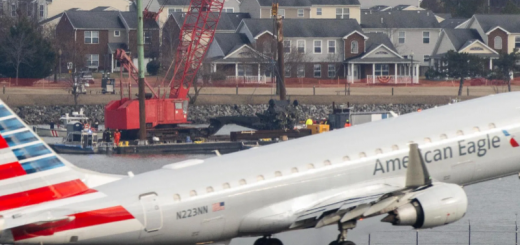
What began as a standard pre-flight sequence at Ronald Reagan Washington National Airport quickly turned into a situation now under federal review.
According to initial reports, two regional aircraft operating under American Airlines made contact while moving on a taxiway—an uncommon incident that has drawn attention from aviation authorities and passengers alike.
What Authorities Say Happened
The Federal Aviation Administration (FAA) confirmed that the wingtip of one aircraft struck another around midday.
One flight was preparing to depart for Charleston, South Carolina, while the other was scheduled to head to New York’s John F. Kennedy International Airport.
Audio recordings from air traffic control communications suggest the crew became aware of the situation almost immediately after hearing an unusual sound during taxi.
Shortly afterward, both aircraft were directed back to the gate.
Passengers Describe the Moment
Among those on board were several members of Congress, who later shared their perspectives.
Josh Gottheimer described the experience as sudden and unexpected, noting that the aircraft was stationary when the contact occurred.
Nick LaLota also addressed the situation publicly, confirming that passengers remained calm and that there were no injuries.
Despite the unusual nature of the incident, reports indicate the situation was handled without panic, and all individuals on board were safely returned to the terminal.
No Injuries, No Major Disruptions
Airport officials later confirmed that:
- Both aircraft returned to their gates safely
- No injuries were reported
- Flight operations at the airport continued without significant disruption
While the physical damage appeared limited to a wingtip component, even minor aircraft contact is taken seriously within the aviation industry.
Investigation Now Underway
Both the FAA and the National Transportation Safety Board (NTSB) are reviewing the incident.
Investigations of this kind typically examine:
- Aircraft positioning and movement
- Communication between pilots and air traffic control
- Ground traffic conditions at the time
The goal is to determine exactly how the contact occurred and whether any procedural changes are needed.
Why Incidents Like This Matter
Although no one was hurt, aviation experts emphasize that even minor ground incidents are important learning opportunities.
Airports like Reagan National operate in tightly managed airspace with frequent traffic, making coordination essential at every stage—from taxi to takeoff.
Recent years have also seen increased discussion around staffing levels, training, and operational procedures across the aviation sector. However, officials stress that investigations rely on verified evidence, and conclusions are only drawn after a full review.
Events like this often highlight the layers of safety built into modern aviation.
From pilot training to air traffic coordination and regulatory oversight, multiple systems work together to prevent incidents—and to respond effectively when something unexpected happens.
In this case, those systems ensured that:
- The situation was quickly identified
- Aircraft were safely returned
- Passengers remained unharmed
While the incident may have been unusual, the outcome underscores a key reality of air travel:
Even when something doesn’t go as planned, safety protocols are designed to protect everyone on board.
And in this instance, they did exactly that.