How Many Monkeys Do You See? The Truth Behind This Viral Puzzle
At first glance, it seems simple.
A playful image filled with rows of smiling monkeys, paired with a bold claim: “The number of monkeys you see determines if you’re a narcissist.”
It’s the kind of statement that instantly grabs attention. You pause. You look closer.
And before you know it, you’re counting.
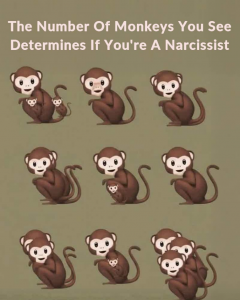
But the real story behind this viral puzzle has very little to do with monkeys—and even less to do with personality labels.
Why Your Brain Keeps Looking
Images like this are designed to do one thing extremely well: hold your attention.
At first, you might see a clear number. It feels obvious. But then something changes.
You notice a smaller shape tucked inside a larger one. Maybe a repeated pattern. Maybe something you completely missed at first.
Suddenly, the answer doesn’t feel so certain anymore.
This isn’t random—it’s how your brain naturally works.
How We Actually See What’s in Front of Us
Human vision isn’t like a camera simply recording reality.
Your brain is constantly:
Filtering information
Prioritizing certain details
Filling in gaps
Recognizing patterns
Psychologists often refer to this as top-down processing—where your expectations and past experiences influence what you notice first.
That’s why two people can look at the exact same image and see different things.
One might focus on the overall shapes. Another might immediately pick up on hidden details.
Neither is wrong.
The Myth About Narcissism
Here’s the important part:
There is no scientific evidence that the number of monkeys you see in an image can determine whether someone is a narcissist.
Narcissism is a complex psychological trait that professionals assess through structured evaluation—not visual puzzles or quick online tests.
The claim attached to the image is simply a form of viral bait—designed to spark curiosity, encourage sharing, and get people talking.
What the Puzzle Actually Reveals
Even though the “narcissist test” isn’t real, the image still highlights something interesting:
People observe the world differently.
- Some naturally see the big picture first
- Others focus on smaller, layered details
- Many shift between both as they look longer
These differences are normal and influenced by attention, experience, and perception—not personality disorders.
Why These Illusions Spread So Fast
There’s a reason puzzles like this go viral so easily.
They trigger three powerful reactions:
- Curiosity – “Did I miss something?”
- Self-reflection – “What does this say about me?”
- Comparison – “How many did others see?”
That combination keeps people engaged—and keeps the image circulating.
A Simple but Useful Reminder
What makes this puzzle interesting isn’t the answer.
It’s the process.
It reminds us that first impressions aren’t always complete. That sometimes, a second look reveals something new. And that what we notice first says more about our attention in that moment than anything deeper.
Final Thought
So no—the number of monkeys you see won’t tell you if you’re a narcissist.
But it might encourage you to slow down, look again, and notice what you didn’t see the first time.
And sometimes, that’s far more valuable.
So… how many monkeys do you see now? 👀