From Quiet Childhood to Infamous Legacy: The Story That Still Haunts America
In an old childhood photograph, he looks like any other boy from a small American town — quiet, shy, unremarkable.
He delivered newspapers, joined the Boy Scouts, and blended easily into everyday life. Neighbors saw a polite child. Teachers saw nothing unusual.
There was nothing about his early years that suggested the name he would one day become — a name that would be remembered across generations.
That boy was Ted Bundy.
A childhood shaped by secrecy
Born in 1946 in Burlington, Vermont, his early life began with uncertainty and silence.
His biological father was never officially identified, and his mother, Louise, raised him in a carefully constructed story meant to protect him from stigma. For years, he was told that his grandparents were his parents — and that his mother was his sister.
The truth eventually surfaced, and when it did, it left emotional scars. Identity confusion, shame, and a fractured sense of belonging shaped his inner world.

Though the family appeared stable from the outside, the emotional foundation beneath it was fragile.
A normal life on the surface
As a child and teenager, Bundy lived what looked like an ordinary life. He went to school, had friends, participated in activities, and lived in quiet neighborhoods.
But socially, he struggled. He dealt with isolation, low self-esteem, and feelings of rejection. He wanted admiration, status, and success — not simply belonging, but importance.
Outwardly, he learned how to appear confident, charming, and composed. Inwardly, resentment and fantasy began to grow.
The double life
As a young adult, Bundy seemed to be building a promising future. He attended college, volunteered on community projects, and even worked on a suicide prevention hotline — presenting himself as intelligent, caring, and responsible.
But behind the image was a hidden reality. His inner world had become dominated by control, obsession, and dark impulses. The contrast between who he appeared to be and who he truly was became the foundation of his later crimes.
A pattern of deception and harm
In the 1970s, Bundy began committing a series of violent crimes across multiple U.S. states.

He used charm, manipulation, and false vulnerability to gain trust. His ability to appear harmless made him especially dangerous.
Authorities later connected him to at least 30 murders, though investigators believe the real number may be higher. His victims were primarily young women, many of them students. His methods relied not on force alone, but on deception and psychological manipulation.
Arrest, trial, and accountability
Bundy was arrested in 1975 after a traffic stop led police to suspicious evidence. His trial became one of the most widely followed criminal cases in American history. In Florida, he was convicted and sentenced to death.
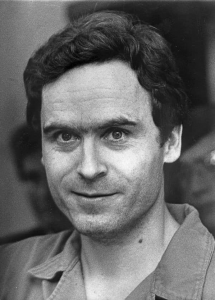
After years of appeals, Ted Bundy was executed on January 24, 1989.
Why his story still matters
The legacy of Ted Bundy isn’t just about crime — it’s about contrast. About how someone can look ordinary, speak kindly, and still carry something deeply broken inside. His story continues to challenge how society understands danger, identity, and human psychology.
Not because he deserves attention —
but because understanding how harm can hide behind normal appearances helps protect others.
His life stands as a reminder that darkness doesn’t always announce itself loudly.
Sometimes it looks familiar. Sometimes it looks harmless.
And sometimes, it looks just like everyone else.