Republican Voters Signal Early Favorite for 2028 Election
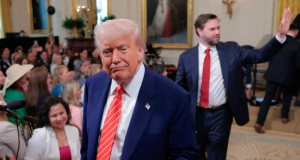
With the 2028 presidential race still years away, new polling suggests that many Republican voters may already be forming clear preferences, though the full picture is more nuanced than it first appears.
A recent national survey has sparked conversation across political circles, pointing to a leading figure within the GOP while also revealing shifting momentum among several well-known names.
A Clear Leader, But Not the Full Story
According to the latest Voters’ Voice Poll conducted by The Center Square, JD Vance currently holds a strong position among Republican-leaning voters.
The survey, which included hundreds of Republicans and independents who lean conservative, asked participants to choose from a list of prominent figures or indicate uncertainty.
At first glance, the results show a decisive lead. But a closer look reveals subtle changes that could matter as the political landscape evolves.
Shifts Beneath the Surface
While Vance remains the top choice, his support has edged slightly downward compared to earlier polling. That shift, though small, comes as other figures begin to gain traction.
Donald Trump Jr. ranks as the second most favored option, though his numbers have also declined since previous surveys.
Meanwhile, Marco Rubio appears to be quietly gaining ground. His support has increased notably, particularly among independent voters—an important group in any general election scenario.
This gradual rise suggests that while the top spot may seem settled for now, the broader field remains fluid.
Different Voters, Different Preferences
The data also highlights how support varies across different groups.
Vance shows particularly strong backing among rural voters, while Trump Jr. performs better in more urban areas.
Among independent voters, Rubio’s growing appeal stands out, positioning him as a potential contender to watch.
Gender trends have also shifted. Earlier polling showed stronger support for Vance among women, but more recent results indicate increased backing among male voters, with some movement toward other candidates among female respondents.
The Rest of the Field
Beyond the top three, several familiar names continue to register smaller levels of support, including Ron DeSantis, Nikki Haley, and Ted Cruz.
Other figures mentioned in the survey include governors, senators, and former cabinet officials—many of whom could still play significant roles as the race develops.
A Potential Challenger Emerges
Amid the polling data, another development adds an interesting layer to the conversation.
Rand Paul has indicated he is considering a possible presidential run in 2028, though no final decision has been made.
He suggested a timeline for deciding could come after the 2026 election cycle.
Paul, who previously ran for president in 2016, has long positioned himself as a voice for fiscal conservatism and a more restrained foreign policy.
In recent remarks, he emphasized the importance of those principles, even as the party continues to evolve.
What It All Means
While early polling can offer a snapshot of current sentiment, history shows that presidential races can shift dramatically over time.
For now, Vance appears to hold a clear advantage—but with changing dynamics, rising contenders, and potential new entrants, the road to 2028 is far from settled.
And if these early signals are any indication, the next phase of the race could be anything but predictable.