From Rural Ireland to a Voice That Defined a Generation
Some voices don’t just sing songs — they shape eras.
They carry emotion so raw and unmistakable that entire generations recognize themselves within it.
That was the power of Dolores O’Riordan.
Her journey began far from stadiums and global charts, in the quiet countryside of Ireland, and ended with a legacy that still echoes across the world. Yet behind that unmistakable voice was a life marked by brilliance, sensitivity, and struggles that few could fully see.
A Childhood Shaped by Silence and Song
Born on September 6, 1971, in Ballybricken, County Limerick, Dolores was the youngest of nine children raised in a deeply religious Roman Catholic household. Life was modest. Her father, Terence, suffered serious brain injuries after a motorbike accident, and her mother, Eileen, worked long hours as a school caterer to support the family.
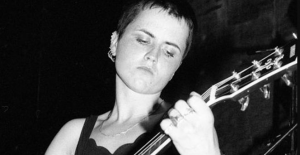
Despite financial hardship, Dolores often described her early years as gentle and imaginative. She found comfort in nature and animals, speaking openly about how music became her first true language.
Long before she could properly articulate her feelings, she was already singing.
Teachers noticed her talent early. By the age of five, she was performing for classmates, standing on desks and singing traditional Irish songs with a confidence that seemed to come from somewhere far older than her years.
A Voice That Couldn’t Be Contained
As a teenager, Dolores lived a disciplined life shaped by music lessons, church, and schoolwork. She matured quickly, often feeling out of place among her peers.
While others focused on typical teenage concerns, she was quietly developing a sound that blended vulnerability, defiance, and deep emotional clarity.
At 18, she left home determined to follow her own path, enduring years of instability and financial struggle. Those difficult years would soon lead her to a life-changing opportunity.
In 1990, a local band searching for a new vocalist heard her sing. The group would soon become known as The Cranberries — and Dolores’ voice would become its unmistakable soul.
Global Fame, Private Weight
The early 1990s transformed the band into an international phenomenon. Songs like “Linger” and “Dreams” introduced audiences to a sound that felt intimate yet expansive. Dolores’ voice — tender, aching, and fierce — stood apart from anything else on the radio.

With “Zombie,” she proved that popular music could also carry moral weight. The song confronted real-world pain and conflict, refusing to soften its message. It became one of the most powerful protest songs of its time.
But fame came fast, and at a young age. Dolores later admitted that success left her little space to grow privately.
Expectations were relentless, and the pressure to perform — emotionally and professionally — never truly eased.
Motherhood, Music, and Healing
Marriage and motherhood brought moments of grounding and joy. She spoke often about how her children gave her purpose and helped her reconnect with herself during difficult periods.
Music remained her anchor, even as her personal life grew increasingly complex.
In later interviews, Dolores spoke openly about trauma from her childhood and about living with bipolar disorder.

Her honesty helped break long-standing stigmas in the music industry, offering others permission to speak openly about mental health long before such conversations were common.
A Legacy That Still Breathes
On January 15, 2018, Dolores O’Riordan passed away in London at the age of 46. The news stunned fans across the world.
Tributes poured in — not only for the artist she was, but for the authenticity she never abandoned.
Her bandmates later reflected that what made Dolores unforgettable wasn’t just her voice, but her honesty.
She never pretended to be anything she wasn’t. Every note she sang carried truth.
Today, her music continues to resonate with new generations — not as nostalgia, but as something alive and relevant.
Her voice remains a reminder that vulnerability can be strength, and that art born from sincerity never fades.
Why Her Story Still Matters
Dolores O’Riordan didn’t just lead a band.
She gave a voice to emotion that many people didn’t yet have words for.
Her life reminds us that greatness and fragility often coexist — and that the most powerful artists are those who dare to be fully human.
Her voice is gone, but its echo is timeless.