Supreme Court Decisions on Redistricting Could Shape the Next U.S. Midterm Elections
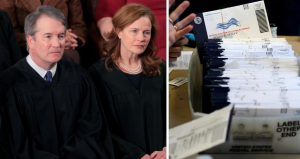
The role of the Supreme Court of the United States in election law is once again drawing national attention, as several ongoing cases involving congressional district maps may influence the political landscape ahead of future midterm elections.
A recent emergency order from the Court allowed New York’s current congressional district map to remain in place while legal appeals continue.
The decision temporarily blocks a lower court ruling that had found the map could weaken the voting strength of certain minority communities.
Because appeals may take time to resolve, the ruling means the current district boundaries are likely to remain in use for upcoming elections.
A Dispute Over New York’s Congressional Map
The case focuses on New York’s 11th Congressional District, which includes Staten Island and parts of Brooklyn.
The district is currently represented by Nicole Malliotakis, one of the few Republicans representing a district in New York City.
After a state court ordered the district to be redrawn, Malliotakis filed an emergency application asking the Supreme Court to pause that decision while the case is reviewed further.
The Court’s unsigned order did not include a detailed explanation—something that is common for decisions issued through its emergency docket.
For now, the ruling allows the existing map to stay in place as the legal process continues.
Another Key Case: Louisiana Redistricting
At the same time, the Supreme Court is also considering a major redistricting case from Louisiana, known as Louisiana v. Callais.
The dispute centers on a congressional map approved by Louisiana lawmakers that created a second majority-Black district after earlier court challenges.
The case raises important questions about how the federal Voting Rights Act of 1965 should be applied when states draw congressional districts.
Understanding Section 2 of the Voting Rights Act
The debate largely revolves around Section 2 of the Voting Rights Act, which allows individuals and organizations to challenge election laws or district maps they believe reduce the voting power of minority communities.
Section 2 has played a major role in redistricting lawsuits since the Supreme Court’s 2013 decision in Shelby County v. Holder.
That ruling removed the law’s “preclearance” requirement, which previously required certain states with a history of discrimination to obtain federal approval before changing election laws.
Since then, Section 2 has become the primary legal mechanism used to challenge district maps in federal court.
Questions Raised by the Justices
During oral arguments in the Louisiana case, the justices examined how race can legally be considered when drawing district boundaries.
The discussion referenced previous rulings including Allen v. Milligan and Thornburg v. Gingles, both of which established legal standards for evaluating claims that district maps dilute minority voting power.
John Roberts, Chief Justice of the United States, questioned how any new ruling would align with those earlier precedents.
Meanwhile, Justice Brett Kavanaugh raised the possibility that race-based remedies under Section 2 could potentially be limited in duration, suggesting the idea of a “sunset” framework.
Potential Impact on Future Elections
Legal analysts say the outcome of these cases could influence how congressional maps are drawn across the country.
In states where one political party controls both the governor’s office and the state legislature, lawmakers may attempt to redraw district boundaries if the legal framework changes.
Observers have pointed to states such as:
-
Georgia
-
South Carolina
-
Tennessee
-
Missouri
-
Florida
as places where future redistricting debates could emerge depending on the Court’s decisions.
Advocacy Groups Voice Concerns
Voting rights organizations have warned that limiting Section 2 protections could make it easier for legislatures to adjust district boundaries in ways that affect political representation.
Some advocacy groups say a number of congressional districts nationwide could potentially be redrawn if current legal standards change.
At the same time, some policymakers are proposing new legislation at the state level to reinforce voting protections regardless of federal rulings.
For example, lawmakers in Mississippi have introduced proposals aimed at creating a state-level version of the Voting Rights Act.
Why the Court’s Decision Matters
Redistricting plays a critical role in American elections because congressional district boundaries can influence how communities are represented in Washington.
With the Supreme Court reviewing multiple cases related to voting rights and district maps, its upcoming decisions could shape the legal framework that guides how states draw congressional districts for years to come.
As the nation awaits the Court’s ruling, legal experts and political observers across the country are closely watching how the justices balance voting rights protections with constitutional considerations.