What the Supreme Court’s 8–1 Decision Really Means for Venezuelan TPS
A Brief but Impactful Decision
In May 2025, the Supreme Court of the United States issued a short but significant order in a closely watched immigration case.
By an 8–1 vote, the Court allowed the federal government to move forward—at least for now—with plans to end Temporary Protected Status (TPS) for certain Venezuelan nationals.
Importantly, this was not a final ruling on the legality of the policy. Instead, it was a temporary step that allows the government’s decision to take effect while the broader legal challenge continues in lower courts.
What the Court Actually Decided
The ruling came in response to an emergency request from the administration after lower courts had blocked the termination of TPS.
The Supreme Court’s order “stayed” those lower court decisions. In practical terms, that means the earlier block was paused—allowing the government to proceed with ending protections tied to Venezuela’s 2023 TPS designation while appeals continue.
These types of decisions are often issued without a full written opinion, focusing instead on whether a policy can move forward during ongoing litigation.
Understanding Temporary Protected Status
Temporary Protected Status (TPS) is a humanitarian program created by Congress in 1990. It allows individuals from certain countries facing serious crises—such as armed conflict or natural disasters—to remain in the United States temporarily without fear of deportation.
Venezuela was granted TPS due to ongoing political and economic instability. Over time, the program has provided protection and work authorization to hundreds of thousands of people living in the U.S.
Estimates suggest that roughly 300,000 to 350,000 Venezuelans were covered under the 2023 designation affected by this case.
How the Case Reached the Supreme Court
The legal dispute began when the Department of Homeland Security moved to end TPS protections for Venezuelans.
A federal judge in California ruled that the decision may have violated federal law, including the Administrative Procedure Act, and blocked the termination. That ruling was later supported by the Ninth Circuit Court of Appeals.
The government then asked the Supreme Court to intervene.
By granting the stay, the Court allowed the policy change to move forward temporarily, even as the legal questions remain unresolved.
Different Perspectives on the Decision
As with many major legal developments, the ruling has prompted a range of responses.
Supporters argue that the decision reinforces the executive branch’s authority to manage immigration programs like TPS. They see it as part of a broader effort to ensure that temporary programs remain temporary in nature.
Critics, including immigrant advocacy groups and some legal experts, have expressed concern about the potential impact on individuals and families who have built lives in the United States under TPS protections.
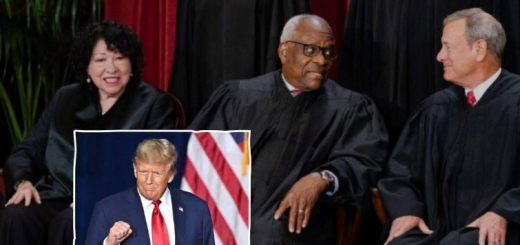
Justice Ketanji Brown Jackson was the lone dissenter in the decision, raising concerns about the increasing use of emergency orders to make significant policy changes without full review.
What Happens Next
The key point to understand is that the legal battle is far from over.
Lower courts are still reviewing whether the government’s decision to end TPS was lawful. Future rulings could either uphold or reverse earlier decisions that blocked the policy.
It is also possible that the Supreme Court will eventually hear the case in full, which would lead to a more detailed and final ruling.
Why This Matters
For many people, this case is not just about legal procedure—it has real-world implications.
TPS recipients often live, work, and raise families in the United States. Changes to their status can affect employment, stability, and long-term planning.
At the same time, the case touches on broader questions about how immigration policies are shaped, challenged, and implemented.
A Decision Still Unfolding
While headlines may describe this as a major ruling, the reality is more nuanced.
The Supreme Court’s decision does not settle the issue—it simply allows one side of the policy debate to move forward while the courts continue to examine the underlying legal questions.
In that sense, this is not the end of the story.
It is a step in a larger process that is still very much in motion.