Do You Have Two Small Indentations on Your Lower Back? Here’s What They Actually Mean
The human body has a way of surprising us, even with details we may have noticed but never questioned.
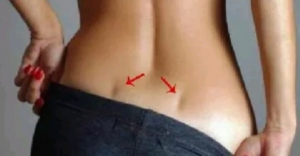
One of those details is a pair of small indentations that sometimes appear on the lower back, just above the hips. Many people call them back dimples, but they’re more formally known as dimples of Venus.
In men, the same feature is often referred to as dimples of Apollo.
Despite the dramatic names, these dimples have a very simple explanation rooted in anatomy.
What are “Venus dimples,” really?
Venus dimples are natural indentations caused by bone structure, not fat, muscle tone, or lifestyle.
They appear where a short ligament connects the skin to a part of the pelvis called the posterior superior iliac spine.
Because there is very little muscle in this exact spot, the skin dips slightly inward, creating the familiar “holes.”
In other words, they’re structural, not something you can train, diet into, or develop later in life.
You either have them — or you don’t.
Are they rare?
Not at all. Many people have them, while many don’t. Their visibility depends on genetics, bone shape, and how close the skin sits to the pelvic structure.
They can become more noticeable with changes in weight, but weight alone does not create them.
Do they indicate health or fitness?
Medically speaking, Venus dimples are neutral.
They are not a medical condition, not a warning sign, and not proof of exceptional health.
Doctors agree that:
They do not indicate circulation quality
They do not predict fitness level
They do not confirm body fat percentage
They are simply a normal anatomical variation, similar to cleft chins or attached earlobes.
Why the name “Venus”?
The term comes from Venus, the Roman goddess associated with beauty. Over time, popular culture romanticized these dimples, which led to exaggerated claims and myths — many of which have no scientific backing.
The bottom line
Venus (or Apollo) dimples:
✔ Are completely natural
✔ Are determined by anatomy and genetics
✔ Are harmless and common
✖ Do not signal special health benefits
They’re simply one of the many ways human bodies differ — nothing more, nothing less.
And sometimes, the most interesting answer is the simplest one.