The Viral “Army Woman” Story That Raised Questions Online
At first glance, she seemed impossible to ignore.
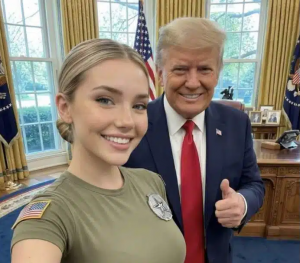
A confident blonde in military gear, photographed near fighter jets and on what appeared to be active bases.
Her posts carried a mix of discipline, patriotism, and polished visuals that quickly drew attention across social media.
Then one image changed everything—she appeared alongside Donald Trump.
Almost overnight, her profile surged.
Followers multiplied. Engagement exploded. And for many, she became a symbol of strength and service.
But not everyone was convinced.
A Rapid Rise That Sparked Curiosity
The account, widely known under the name “Jessica Foster,” gained traction at a pace rarely seen.
Supporters praised her dedication, thanked her for her “service,” and admired the lifestyle she appeared to represent.
To many, she felt authentic—someone to look up to.
Yet as her popularity grew, so did the questions.
Small Details, Bigger Doubts
Some observers began noticing subtle inconsistencies:
- Military insignia that didn’t fully match official standards
- Lighting and shadows that appeared unusually perfect
- Backgrounds that looked slightly artificial under closer inspection
Individually, these details were easy to overlook. But together, they began to raise doubts.
More importantly, no verified public record confirmed the identity or service history associated with the name.
What Investigations Suggested
As online scrutiny increased, analysts and digital media experts weighed in. Reports indicated that the images associated with the account were likely created using artificial intelligence tools.
In other words, the person many believed to be real may not have existed at all.
Why These Accounts Gain Attention
Experts note that profiles like this often follow a pattern: visually striking images combined with themes people trust—such as service, discipline, or authority.
When done convincingly, this combination can attract large audiences very quickly.
In some cases, such accounts are later linked to external platforms or monetization strategies, using attention to generate traffic or revenue.
A Changing Digital Landscape
What makes stories like this stand out isn’t just the possibility of deception—it’s how believable everything appears.
With advances in AI-generated content, it has become increasingly difficult to distinguish between real and digitally created identities, especially in fast-moving social feeds.
What This Means Going Forward
This situation reflects a broader shift in how content is created and consumed online.
As visuals become more polished and technology more advanced, critical thinking plays a bigger role than ever. Not everything that looks real has a real-world counterpart.
And sometimes, the stories that spread the fastest…
are the ones worth questioning the most.