Could Zohran Mamdani Be Blocked From Taking Office as New York’s 111th Mayor? A Surprising Detail Has Surfaced
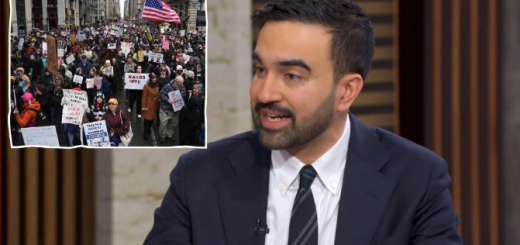
When Zohran Mamdani won the 2025 New York City mayoral election, he didn’t just secure a historic victory, he reshaped what leadership in America’s largest city looks like.
At just 34 years old, Mamdani — born in Kampala, raised in Queens, and long known for grassroots activism — became the first Muslim, first South Asian, and first Africa-born mayor in New York City history.
His election marked a cultural turning point for a city defined by diversity and global identity.
He is officially scheduled to take office on January 1, 2026.
But a surprising historical detail has surfaced — one that could change the ceremonial numbering of his mayorship.
A Historian’s Discovery: The “Missing Mayor”
Historian Paul Hortenstine, while researching early colonial governance, uncovered a centuries-old oversight:
New York may have miscounted its mayors for more than 300 years.
Here’s the issue:
Matthias Nicolls, listed as the city’s sixth mayor, served two separate, non-consecutive terms:
1672
1675
Today, non-consecutive terms are counted separately — the most famous example being Grover Cleveland, who is both the 22nd and 24th U.S. president.
But in the 17th century, recordkeeping wasn’t as consistent. Nicolls’s second term was never counted as its own administration.
According to Hortenstine, every mayor after that has technically been assigned the wrong number — meaning that Mamdani, widely announced as the 111th mayor, could actually be the 112th.
He traced the error to a mistranslated Dutch-English ledger and has contacted the city to share his findings.
This Isn’t the First Time the Question Has Come Up
Back in 1989, historian Peter R. Christoph raised similar concerns.
City officials… simply ignored it.
Fixing the numbering would require:
Updating official archives
Revising public plaques
Correcting databases
Amending ceremonial designations
And for decades, New York has chosen tradition over technical accuracy.
Now the conversation has resurfaced — just as Mamdani prepares to make history.
Does This Change Anything for Mamdani?
Legally? No.
Symbolically? Absolutely.
This discovery doesn’t challenge his election, authority, or qualifications.
But it does highlight something poetic:
A groundbreaking, modern election now meets a dusty footnote from the 1600s — reminding New Yorkers that even in politics, history echoes forward in unexpected ways.
A City Built on Layers of Stories
New York has always been a place of reinvention, immigrant narratives, and hidden histories. A miscounted mayor might seem small, but the symbolism is powerful:
A forgotten number
A rediscovered fact
And a brand-new mayor who represents communities that were once invisible in city politics
As Mamdani prepares to take office, one thing is clear:
New York’s future is being written by people who understand its past — even the parts forgotten in old archives.
History bends, evolves, and reveals itself…
And in 2026, it will welcome a mayor whose story reflects the city itself.