Melania Trump’s Pink Gown Draws Attention at White House State Dinner
A Look That Sparked Conversation
At high-level state events, every detail is noticed—and sometimes, a single fashion choice can become the center of attention.
That’s exactly what happened when Melania Trump appeared at a formal White House state dinner in a soft pink gown that quickly captured public interest.
Elegant, distinctive, and carefully tailored, the look stood out—not only for its design, but for the broader conversation it inspired.
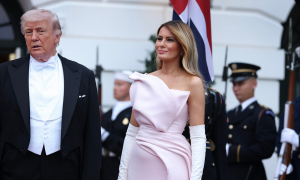
An Evening of Ceremony and Style
The dinner, held in honor of King Charles III and Queen Camilla, followed the traditions typically associated with state visits—formal attire, ceremonial elements, and a setting designed to reflect diplomacy at its highest level.
Events of this kind often adhere to long-standing expectations, particularly when it comes to dress codes. White-tie occasions are known for their structured elegance, with carefully chosen attire that reflects both tradition and occasion.
A Modern Interpretation of Formalwear
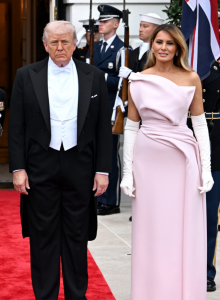
Melania’s gown, designed by Christian Dior Haute Couture, offered a refined yet modern take on that tradition.
The soft pink tone, sculpted silhouette, and strapless design created a look that blended classic craftsmanship with contemporary style. Paired with elegant gloves and understated accessories, the ensemble reflected a balance between timeless formality and personal expression.
Why It Stood Out
In traditional settings, subtle details—such as color, structure, and styling—often carry meaning.
Historically, lighter tones like white have frequently appeared at royal banquets, contributing to a sense of uniformity and formality. Against that backdrop, the choice of pink naturally drew attention.
But attention, in this context, isn’t unusual.
Fashion at this level often becomes part of the event itself—an extension of the moment that invites observation and discussion.
A Range of Reactions
As expected, reactions were varied.
Many praised the look for its elegance and precision, noting the quality of tailoring and the confidence it conveyed. Others saw it as a slightly unconventional choice for such a traditional setting.
Both perspectives reflect the evolving nature of formal style.
Even within established traditions, there is often room for interpretation—and over time, those interpretations can help shape new norms.
Tradition Meets Personal Expression
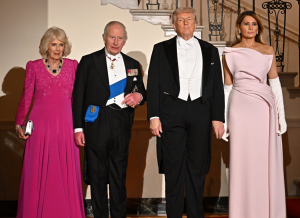
Interestingly, Queen Camilla also chose a pink gown for the evening, suggesting that even long-standing expectations continue to adapt in subtle ways.
Moments like this highlight an important balance:
Respect for tradition, paired with the freedom to express individual style.
More Than Just Fashion
While the discussion focused on the gown, it also reflected something broader.
State events are closely watched—not only for their political significance, but for the symbolism carried in every detail. From attire to gestures, each element contributes to how the moment is perceived.
In that sense, fashion becomes part of the larger narrative.
In the end, the conversation surrounding the gown says as much about the audience as it does about the design itself.
Expectations evolve. Styles shift. And what stands out today can shape what becomes familiar tomorrow.
What remains constant is the ability of a single, well-crafted choice to capture attention—and start a conversation.