Why a Single Image Can Completely Change the Way You See the World Around You
Every day, your brain processes thousands of pieces of information without you even realizing it. From social media posts and news headlines to advertisements and short videos, your eyes are constantly scanning new content. In fact, most people spend only a few seconds deciding whether something is worth their attention before scrolling to the next post.
But what if those few seconds aren’t enough?
Sometimes, a single photograph, illustration, or optical illusion can completely change the way you think—not because the image itself changes, but because your perspective does.
The ability to notice hidden details, question first impressions, and look beyond the obvious has become increasingly valuable in today’s fast-paced digital world. Understanding how our minds process visual information can help us become better thinkers, more informed decision-makers, and more attentive observers in everyday life.
Let’s explore why a simple image can have such a powerful impact on the human mind.
The Digital Age Has Changed How We Pay Attention
Never before have people been exposed to as much information as they are today. Smartphones, social media platforms, online news, streaming services, and instant messaging provide a constant flow of updates every hour of the day.
Researchers in psychology and cognitive science have shown that when information arrives rapidly, the brain naturally begins making faster decisions. Rather than carefully examining every detail, it relies on shortcuts—known as heuristics—to quickly determine what deserves attention.
This isn’t necessarily a flaw. It’s actually an efficient survival mechanism that allows us to process large amounts of information without becoming overwhelmed.
However, there’s a trade-off.
The faster we consume content, the more likely we are to overlook important details hiding in plain sight.
Why First Impressions Feel So Convincing
Human brains are remarkably efficient pattern-recognition machines.
Within milliseconds of seeing an image, your brain begins answering questions automatically:
- Have I seen something like this before?
- Is it important?
- Is it safe?
- Can I move on?
These rapid judgments help us navigate everyday life efficiently, but they can also create blind spots.
When something looks familiar, we often assume we already understand it. As a result, we stop paying close attention before we’ve fully processed what we’re seeing.
This explains why many people miss hidden objects in visual puzzles or overlook important details in photographs until someone points them out.
The information was always there—the brain simply decided it wasn’t necessary to examine it more closely.
How Modern Technology Encourages Quick Thinking
Digital platforms are intentionally designed to capture attention.
Infinite scrolling, autoplay videos, personalized recommendations, and eye-catching headlines encourage users to keep moving from one piece of content to the next.
This design isn’t inherently negative—it allows people to discover information quickly and stay connected with current events.
However, it also means people rarely spend long analyzing a single image or article.
Studies in attention and media psychology suggest that repeated exposure to fast-moving digital content can encourage more surface-level processing, where people focus primarily on obvious features rather than deeper meaning or context.
This doesn’t mean attention spans are permanently shrinking, but it does highlight how digital habits influence the way we consume information.
The Hidden Power of Looking Twice
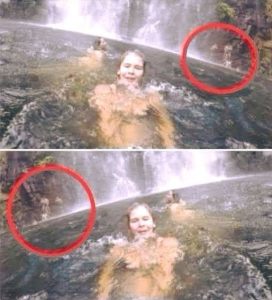
Have you ever looked at a picture, failed to notice something, and then suddenly couldn’t unsee it once someone pointed it out?
This experience reveals something fascinating about perception.
Seeing isn’t just about what reaches your eyes—it’s also about how your brain interprets that information.
When you’re encouraged to look again, your attention shifts.
Instead of relying on automatic assumptions, your brain begins actively searching for patterns, relationships, and overlooked details.
Often, completely new information becomes visible even though the image itself never changed.
This simple act of taking a second look demonstrates that perception is flexible rather than fixed.
Why Curiosity Improves Observation
Curiosity is one of the most powerful tools for improving perception.
When people become curious, they naturally slow down and investigate rather than rushing to conclusions.
Instead of asking, “What am I looking at?” they begin asking:
- What did I miss?
- Is there another explanation?
- Why does this look different now?
These questions encourage deeper thinking and activate more deliberate cognitive processes.
Scientists studying learning and memory have found that curiosity can improve attention, increase information retention, and enhance problem-solving abilities.
In other words, curiosity doesn’t simply help us learn—it helps us notice what others might overlook.
The Science Behind Missing Details
Our brains constantly filter incoming information.
If they didn’t, every sound, color, movement, and object around us would compete equally for attention, making everyday tasks incredibly difficult.
Instead, the brain prioritizes information it believes is most relevant.
This selective attention is useful, but it also explains why people can completely miss unexpected details—even when they’re directly in front of them.
Psychologists refer to one well-known example as “inattentional blindness,” where focusing intensely on one task causes individuals to overlook other obvious events occurring nearby.
It’s not that the eyes failed to see them.
The brain simply chose not to process them.
Beyond Images: A Lesson for Everyday Life

The same mental shortcuts we use while viewing images also influence how we judge situations and people.
First impressions often shape our opinions before we’ve gathered enough information.
Someone may seem unfriendly simply because they’re shy.
A difficult situation may appear hopeless until additional facts emerge.
An unexpected opportunity may go unnoticed because it doesn’t fit our expectations.
Learning to pause before making quick judgments can lead to better decisions, stronger relationships, and a more balanced understanding of the world.
The habit of observing carefully extends far beyond digital content.
It becomes a valuable life skill.
Practical Ways to Become More Observant
Improving observation isn’t complicated, but it does require intentional practice.
Some simple habits include:
- Spend a few extra seconds examining images before moving on.
- Read beyond headlines to understand the full context.
- Question your first assumptions instead of immediately accepting them.
- Reduce distractions when consuming important information.
- Practice mindfulness by paying closer attention to your surroundings.
Over time, these habits strengthen critical thinking and improve your ability to notice meaningful details that others might overlook.
Why Slowing Down Is Becoming a Superpower
In a world built around speed, slowing down has become surprisingly valuable.
Careful observation allows people to detect patterns, avoid misunderstandings, and make more informed decisions.
Whether you’re interpreting an image, reading an article, solving a problem, or having a conversation, taking a moment to look beyond the surface often reveals insights that aren’t immediately obvious.
Attention is one of the most valuable resources we have—and where we choose to direct it shapes how we understand the world.
Final Thoughts
A single image may seem ordinary at first glance, but sometimes it has the power to completely change the way we think.
Not because the picture changes, but because we do.
Modern technology encourages fast decisions and rapid scrolling, making it easy to overlook details that deserve a second look. By developing curiosity, slowing down, and observing more carefully, we can improve not only how we interpret digital content but also how we approach everyday life.
The next time an image catches your attention, resist the urge to scroll away immediately.
Pause.
Look again.
You may discover that the most interesting part wasn’t hidden in the picture—it was hidden in the way your mind was seeing it all along.