He Told Me to Leave After My Daughter’s Funeral – A Week Later, Everything Changed
Grief has a way of slowing time.
At my daughter’s funeral, everything felt distant—voices blurred together, faces came and went, and the weight of the moment pressed down in a way words can’t fully describe.
The church was full, yet I had never felt more alone.
I stood near the casket, staring at it as if looking long enough might somehow change reality. It didn’t. Loss doesn’t negotiate.
Laura had been my entire world. After losing my wife years earlier, she became the reason I kept moving forward.
I raised her on my own—learning as I went, making mistakes, trying my best to give her a life filled with stability, opportunity, and love.
And for the most part, I did.
I was there for every milestone—school events, late-night homework, her graduation. I was there the day she introduced me to the man she would later marry.
Daniel.
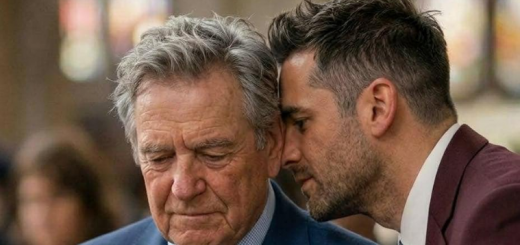
Even at the funeral, I couldn’t ignore him. He stood near the front, composed and controlled, receiving condolences with quiet confidence. To most people, he looked like a grieving husband. But I knew him differently.
When the service ended and people began to leave, he approached me.
“We need to talk,” he said.
There was something in his tone—cold, distant, almost procedural. Still, I followed him aside, expecting something about arrangements, family matters, or the days ahead.
Instead, he leaned closer and said quietly:
“You have 24 hours to leave my house.”
No anger. No hesitation. Just a calm statement, as if he were settling a routine matter.
For a moment, I said nothing.
Then I nodded.
“I understand,” I replied.
I didn’t argue. I didn’t remind him of the years I had spent supporting that household, or the ways I had helped build the life he now claimed as entirely his.
That night, I packed one small bag and left.
Starting Over, Again
The house felt empty without Laura. Not just quiet—empty in a way that changed the meaning of every room. I took only what I needed: clothes, documents, and a few personal items that held memories I couldn’t leave behind.
Everything else stayed.
Some things aren’t worth carrying.
I spent that night in a modest room near the train station. Sleep didn’t come easily. Grief rarely allows it.
By morning, reality had settled in. I had lost my daughter—and now, my home.
But there was something Daniel didn’t understand.
The Truth He Overlooked
Years earlier, when Daniel was just starting his business, he didn’t have much more than ambition and an idea. Financial institutions turned him away. Opportunities didn’t come easily.
Laura believed in him.
And because she believed in him, I chose to help.
Quietly.
What began as support eventually became something more structured. Legal agreements were put in place. Investments were documented. Ownership was defined—not loudly, not publicly, but clearly.
At the time, I stayed in the background. Laura wanted peace, not conflict, and I respected that.
But circumstances change.
A few days after leaving the house, I made a call to my legal advisor. Not out of anger—but out of clarity.
We reviewed everything.
And the facts were simple.
I was the majority shareholder.
Seven Days Later
About a week later, Daniel received a call.
The company was undergoing internal restructuring, and key decisions required approval from the majority owner.
That’s when he learned the truth.
Ownership wasn’t where he thought it was.
What he had always assumed was fully his… wasn’t.
A Different Kind of Response
He contacted me soon after.
This time, his tone was different—less certain, more measured.
We met in a neutral space, away from the house and away from emotion. The conversation wasn’t about revenge. It wasn’t about humiliation.
It was about reality.
I explained the situation calmly. The agreements, the structure, the responsibilities that came with it. Everything had been there from the beginning—nothing hidden, nothing unclear.
Just overlooked.
He listened.
And for the first time, he understood that control isn’t always where it appears to be.
Moving Forward
I had a choice.
I could have escalated things, taken full control aggressively, and dismantled everything he had built.
But that wouldn’t have honored the reason I helped in the first place.
Laura.
Instead, I chose a different path.
The company was restructured properly—with oversight, accountability, and fairness for the people who worked there. Roles were adjusted, responsibilities clarified, and decisions made with long-term stability in mind.
Daniel remained involved—but not in the same way.
And that was enough.
What Remains
Loss doesn’t disappear.
There are still moments when it returns without warning—small reminders, familiar places, quiet memories that linger longer than expected.
But over time, something else takes its place.
Perspective.
What happened that day at the funeral felt like an ending.
In some ways, it was.
But it also forced a change that had been waiting for years—a shift from silence to clarity, from background support to visible responsibility.
A Final Thought
Respect isn’t something claimed in a single moment.
It’s built—or broken—over time, through actions, decisions, and how we treat others when it matters most.
Sometimes, people underestimate quiet strength.
They mistake patience for weakness.
They assume that what isn’t spoken doesn’t exist.
But the truth has a way of revealing itself—eventually.
And when it does, it doesn’t need to be loud to be understood.