Trump Received Updates Remotely During High-Stakes Military Rescue Mission
A recent report has drawn attention to how Donald Trump was kept informed during a high-risk U.S. military rescue operation.
The situation unfolded after an F-15E Strike Eagle aircraft went down during operations in a region described as hostile territory.
While one crew member was recovered quickly, the second remained missing for more than a day, prompting an urgent and complex search-and-rescue effort.
Military officials described the mission as both challenging and time-sensitive.
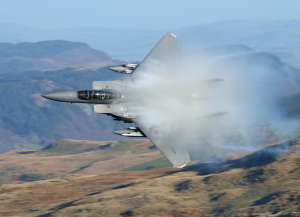
Rescue teams worked under difficult conditions to locate the missing airman, relying on intelligence and coordinated efforts across multiple agencies.
Operations of this kind often involve real-time decision-making and constant updates as new information becomes available.
According to reporting by The Wall Street Journal, President Trump was not physically present in the Situation Room during parts of the operation.
Instead, he reportedly received updates by phone while senior officials—including Vice President JD Vance and White House Chief of Staff Susie Wiles—monitored developments directly from the Situation Room.
A senior official cited in the report indicated that updates were provided at key moments, rather than continuously in person.
The same report noted that the president reacted strongly when informed of the situation, expressing frustration during internal discussions.
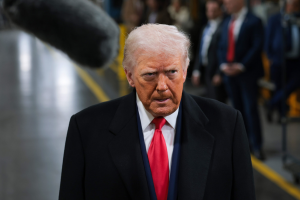
However, public statements from administration officials emphasized that leadership remained focused on the mission and its successful outcome.
As with many high-pressure situations, differing accounts can reflect both the intensity of the moment and the perspectives of those involved.
The operation concluded successfully when the missing airman was located and safely extracted.
Officials credited intelligence efforts, including support from agencies such as the CIA, with helping identify the individual’s location under difficult conditions.
Rescue missions of this nature are often described as complex and resource-intensive, particularly when they take place in contested environments.
The incident comes at a time of heightened tension between the United States and Iran.
Statements from both sides in recent weeks have reflected a cautious and, at times, strained diplomatic environment. Analysts note that developments in one area—military, political, or diplomatic—can quickly influence the broader situation.
Reports like this highlight how critical decisions and communications are managed during fast-moving events.
While details can vary depending on sources, the outcome of the mission—bringing a service member home safely—remains the central focus.
In complex situations, coordination, timing, and access to accurate information often play a decisive role in shaping the final result.