AI Simulation Sparks Discussion About the 2028 U.S. Presidential Election
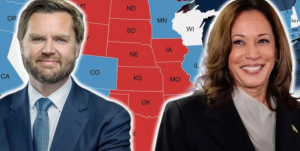
As interest in the next U.S. presidential race begins to build, a recent artificial intelligence simulation has captured attention online – offering a hypothetical look at how the 2028 election could unfold.
It’s important to note from the start: this is not a prediction based on confirmed candidates or official data.
Instead, it’s a model-driven scenario built on assumptions, early polling trends, and hypothetical matchups.
How the Simulation Was Created
The projection was generated using an AI chatbot known as Grok, developed by xAI, which is associated with Elon Musk.
In this case, a content creator asked the system to simulate a possible 2028 election outcome.
The model produced a detailed breakdown, including an electoral map, state-by-state results, and projected vote totals based on selected candidates.
The Hypothetical Outcome
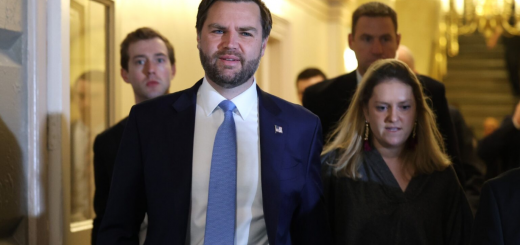
In the simulation, JD Vance was projected as the Republican nominee, while Kamala Harris represented the Democratic side.
The model suggested a potential outcome of 312 electoral votes for Vance and 212 for Harris, with 270 required to win the presidency.
Again, these numbers reflect a scenario—not a real forecast.
What Data Was Considered
The AI-based model drew on several factors, including:
- Early polling trends
- Hypothetical candidate matchups
- Recent voting patterns in individual states
- General political shifts observed in past elections
For example, states that have shown consistent voting trends in recent cycles were categorized as “solid” or “likely,” helping shape the overall map.
Why These Simulations Get Attention
Content like this often spreads quickly because it blends data with imagination.
In a digital environment where audiences are curious about future outcomes, even speculative models can generate strong reactions.
However, they can also be misunderstood if taken as definitive predictions rather than exploratory scenarios.
The Reality of 2028
At this stage, the 2028 presidential election remains largely undefined.
Candidates have not formally entered the race, and political landscapes can shift significantly over time.
Factors such as policy developments, global events, and voter priorities will all play a role in shaping the eventual outcome.
A Broader Perspective
AI tools are increasingly being used to analyze trends and simulate possibilities, but they are not designed to predict the future with certainty.
Instead, they provide a snapshot of “what if” scenarios—useful for discussion, but not for conclusions.
As technology continues to influence how information is created and shared, it’s becoming more important to separate speculation from reality.
Simulations like this can be interesting to explore—but the real story of the 2028 election has yet to be written.
WATCH: