Fans React to Rare Appearance by Catherine Zeta-Jones and Michael Douglas

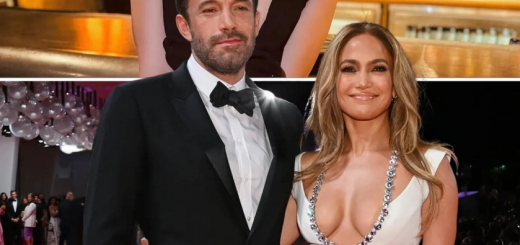
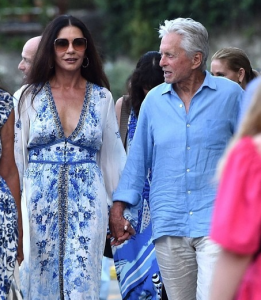
A recent appearance by Catherine Zeta-Jones and Michael Douglas has once again drawn attention from fans and media alike.
As one of Hollywood’s most recognized couples, even their quieter moments tend to spark widespread discussion—especially in today’s fast-moving digital environment.
A Moment That Caught Attention
The couple’s appearance wasn’t part of a major announcement or event.
Instead, it was a simple, rare glimpse into their lives—something that, in the age of social media, can quickly become a topic of global conversation.
Photos and clips began circulating online, prompting a wide range of reactions from fans.
Why Reactions Spread So Quickly
In modern media culture, even small moments can take on a life of their own.
Platforms amplify content rapidly, and audiences often respond instantly—sometimes based on limited context. What begins as a single image or appearance can quickly evolve into a broader narrative shaped by interpretation rather than full information.
This is especially true for well-known figures like Zeta-Jones and Douglas, whose long-standing relationship has been in the public eye for decades.
A Relationship in the Spotlight
The couple, who married in 2000, have built a reputation as one of Hollywood’s more enduring partnerships.

Over the years, their relationship has often been discussed in terms of longevity, shared success, and their ability to maintain stability despite constant public attention.
They have also been open about prioritizing family life alongside their careers, a balance that many fans admire.
Public Perception vs. Private Reality
Moments like this highlight a broader reality of celebrity culture.
What audiences see is often only a small portion of a much larger, more complex personal life. Public appearances, photos, and headlines can create impressions—but they rarely tell the full story.
At the same time, online reactions tend to reflect individual perspectives rather than objective truth.
The Role of Media Framing
How a story is presented plays a major role in how it is received.

Headlines and captions often emphasize emotional or attention-grabbing elements, which can shape how audiences interpret what they see. Over time, these interpretations can become widely accepted, even when they are based on limited details.
This dynamic is not unique to celebrity stories—it reflects how modern media operates across many types of content.
Why Moments Like This Matter
While the appearance itself may have been simple, the reaction to it reveals something deeper.
It shows how connected audiences still feel to long-established public figures, and how quickly attention can shift toward personal details in a digital-first world.
For many, it’s not just about what happened—it’s about what it represents.
In the end, moments like these serve as a reminder that public perception and private reality are not always the same.
Behind every widely shared image or headline are real people, living lives far more complex than what can be captured in a single moment.
And sometimes, understanding that difference is what brings the clearest perspective of all.