Rubio Reportedly Moves to Dismiss Foreign Service Officer Over Undisclosed Relationship
A reported internal case within the U.S. State Department has drawn attention after allegations surfaced involving an undisclosed personal relationship and potential security concerns.
According to statements attributed to department officials, a foreign service officer was dismissed following an internal review tied to a relationship with a foreign national—one that was not formally disclosed as required under security protocols.
A Case That Quickly Escalated
The situation gained public attention after footage released by O’Keefe Media Group appeared to show the officer discussing the relationship.
In the video, the individual—identified in reports as Daniel Choi—allegedly acknowledged that his partner’s family had links to the Chinese Communist Party and admitted he had not reported the connection to officials.
The authenticity and full context of the footage have not been independently verified by multiple major outlets at the time of writing.
Security Protocols and Disclosure Requirements
Within the State Department, foreign service officers are required to disclose “close and continuing contact” with foreign nationals, particularly when there may be potential ties to foreign governments.
These policies are designed to prevent risks such as coercion, undue influence, or unauthorized access to sensitive information.
Officials familiar with such procedures say that failure to disclose these relationships can trigger serious disciplinary action, regardless of intent.
Official Response and Reported Action
Statements attributed to the department indicate that the officer’s dismissal followed a review process and was tied to the alleged failure to comply with disclosure requirements.
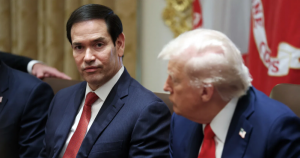
Reports suggest that Marco Rubio supported the decision, emphasizing accountability within diplomatic ranks.
There have also been references to broader policy frameworks linked to executive authority over foreign service conduct, though details surrounding the specific legal basis for this case remain limited in public reporting.
Broader Concerns Around Counterintelligence
The situation has also reignited discussion about how governments manage risks related to personal relationships.
Security experts have long noted that personal connections—romantic or otherwise—can sometimes be exploited in intelligence-gathering efforts.
While there is no public evidence confirming espionage activity in this specific case, the concern lies in the potential vulnerability created by undisclosed ties.
What Remains Unclear
Several aspects of the case are still not fully confirmed through multiple independent sources, including:
- the full context of the recorded footage
- details of the internal investigation
- whether any classified information was involved
As a result, many reports continue to rely on preliminary or single-source information.
A Reminder of How Policy and Personal Life Intersect
Cases like this highlight a complex reality faced by individuals in sensitive government roles.
Personal decisions—particularly those involving foreign connections—can carry professional consequences when they intersect with national security responsibilities.
For institutions, the challenge remains balancing individual privacy with the need to manage risk.