What You Notice First May Say More About Attention Than Personality
The human brain processes an incredible amount of information every second.
Although we are constantly surrounded by sounds, colors, shapes, and movement, we consciously notice only a small portion of it.
According to psychology and neuroscience research, this selective attention is shaped by experience, memory, emotions, and cognitive patterns.
In other words, perception is not simply about what the eyes see—it’s also about how the brain interprets information.
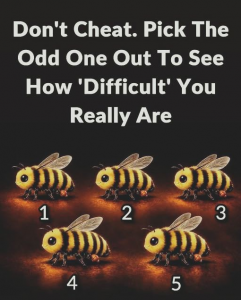
Why People See Things Differently
This becomes especially noticeable in visual perception puzzles and optical illusions.
Two people can look at the exact same image yet focus on completely different details first.
Some individuals naturally notice the larger structure of an image, while others immediately focus on smaller or hidden elements.
Cognitive researchers often describe these differences as variations in attentional style rather than fixed personality traits.
For example:
- Detail-focused viewers may process information more analytically
- Big-picture viewers may naturally focus on overall patterns and relationships
- Others shift between both approaches depending on the situation
None of these styles are considered better or worse—they simply reflect different ways the brain organizes information.
The Science Behind It
Psychologists explain that the brain uses rapid “pre-attentive processing” to scan for recognizable patterns before conscious thinking fully begins.
This helps humans quickly make sense of complex environments.
As a result, attention is influenced by:
- Familiarity
- Expectations
- Emotional state
- Past experiences
- Context
This is why visual perception tests often feel personal, even though they are not scientific personality assessments.
Why These Puzzles Fascinate People
Part of the appeal comes from self-reflection. People enjoy comparing what they noticed first and exploring how differently others interpret the same image.
These exercises also serve as reminders that perception is highly flexible.
The brain is constantly filtering and prioritizing information to avoid overload, meaning each person experiences the world slightly differently.
The Bigger Picture
Modern cognitive science suggests that perception is dynamic, not fixed.
What someone notices first in a visual scene may reveal how attention is organized in that moment—not define who they are as a person.
Ultimately, visual puzzles are less about finding a “correct” answer and more about understanding how fascinating and adaptable the human mind truly is.