Trump Addresses Growing Concerns Over Scientists Who Have Died or Gone Missing
A Conversation That’s Quietly Growing
In recent days, online discussions have brought renewed attention to several cases involving scientists whose deaths or disappearances have been noted over the years.
Individually, these cases were reported at different times and in different contexts.
But as they have been revisited together, some observers have begun asking whether there could be any overlap—or whether the timing is simply coincidental.
At this stage, there is no confirmed connection between the cases.
A Measured Response From Washington
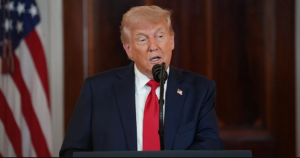
Donald Trump recently acknowledged the growing interest in these reports, noting that officials are taking a closer look.
Speaking to reporters, he indicated that a review is underway, expressing hope that the situations are unrelated but emphasizing the importance of understanding the facts clearly.
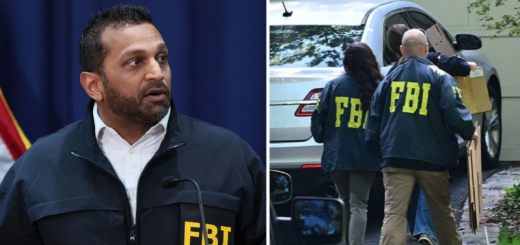
The White House also shared that multiple agencies, including the Federal Bureau of Investigation, are participating in a broader effort to examine the available information.
Officials have stressed that the goal is to carefully review each case, identify any possible common elements, and provide updates as more details become clear.
One Case Often Mentioned
Among the cases receiving renewed attention is that of Amy Eskridge, a researcher based in Huntsville, Alabama, who passed away in 2022 at the age of 34.
Public records indicate her death was ruled a self-inflicted gunshot wound. While the circumstances have been discussed in various online spaces, there has been no official indication linking her case to others.
Eskridge was known for her interest in experimental propulsion concepts and had spoken publicly about the challenges faced by researchers working on unconventional ideas.
Some of her past comments, now being revisited, reflect the pressures she felt in her field—but they remain personal perspectives rather than verified evidence of broader issues.
Why These Cases Are Being Discussed Together
The renewed attention appears to be driven less by confirmed facts and more by timing and shared professional backgrounds.
Some of the individuals mentioned in online discussions have worked in areas such as aerospace, defense, or advanced scientific research. This overlap has led to increased curiosity, even though authorities have not identified any direct connection.
Agencies, including the Department of Energy’s National Nuclear Security Administration, have acknowledged awareness of the reports and are reviewing the information as part of standard procedures.
The Importance of Context
**Amy Eskridge – Disclosure**
Amy Eskridge was a scientist who researched anti-gravity technology and wanted to help the world. She is tragically not with us anymore, but we can still learn from her. Disclosure doesn’t come from the top down. We need to wake people up.
Amy… pic.twitter.com/2ULQRGkqKI
— Ashton Forbes (@AshtonForbes) January 28, 2024
When multiple cases are discussed together, it can create the impression of a pattern—even when one has not been established.
Experts often note that context plays a key role in understanding events like these. Each situation has its own circumstances, timeline, and findings, which may not align in a way that supports a broader conclusion.
For now, officials continue to emphasize that no verified link has been confirmed.
A Careful Approach Moving Forward
As the review continues, the focus remains on gathering accurate information and avoiding premature conclusions.
Public interest is understandable, especially when stories involve complex fields and unanswered questions. At the same time, responsible reporting depends on distinguishing between what is known and what is still uncertain.
This is Amy Eskridge.
She is one of the 11 scientists who has died/disappeared recently that’s linked to high government research and secrets.
Amy researched anti-gravity and in this clip reveals anti-gravity was already discovered 4 times, but each time the government… pic.twitter.com/ZxXopvxGO9
— Power to the People ☭🕊 (@ProudSocialist) April 18, 2026
Updates are expected as more information becomes available.
In a connected world, discussions can grow quickly—sometimes faster than the facts themselves.
Moments like this highlight the value of patience and careful consideration, especially when dealing with sensitive topics.
Because while questions can spark important conversations, answers require time—and evidence.
Do you think it’s important to wait for full investigations before drawing conclusions in cases like these?